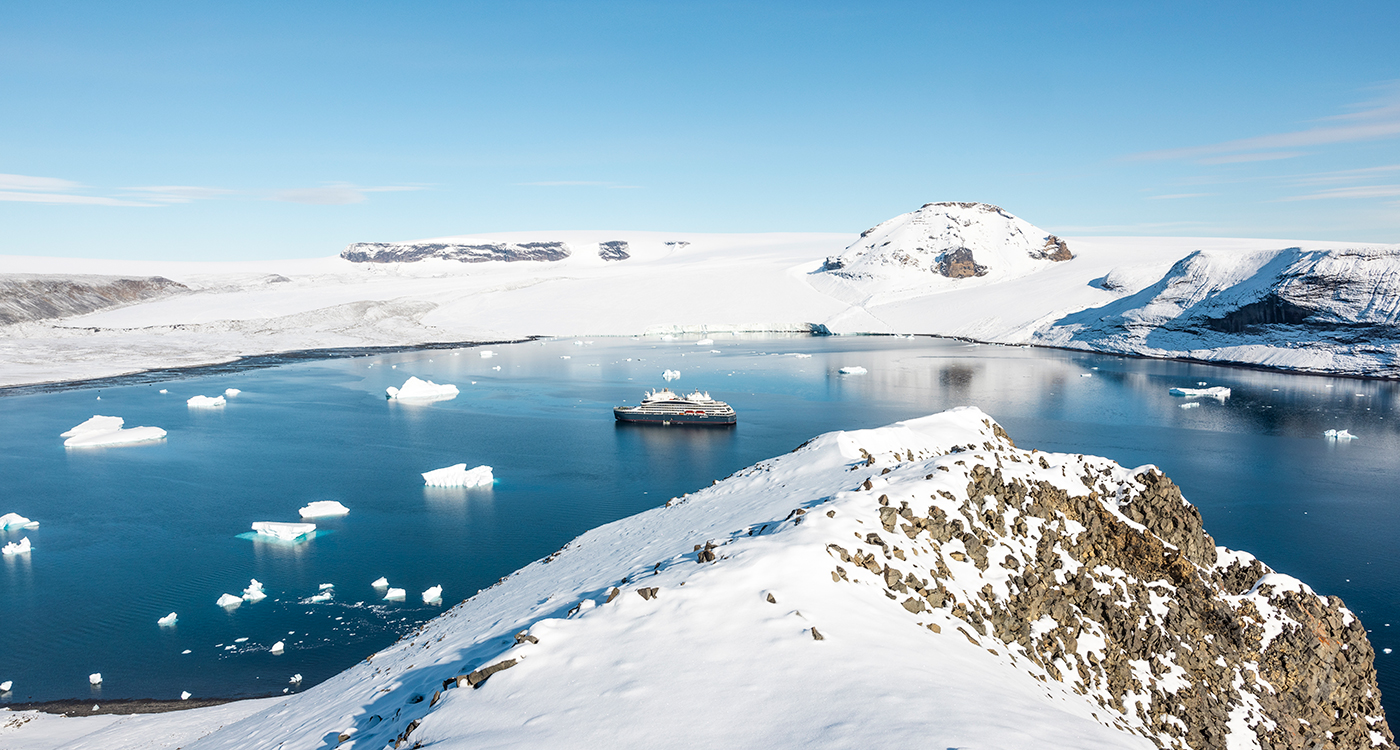
When we think of expedition cruising, that ever-growing travel segment dedicated to whisking intrepid travellers to the world’s most far-flung corners, we tend to think of hardy little vessels, big on adventure but light on comfort. Indeed, the first time I went to Antarctica back in 2010, I passed through the dreaded Drake Passage aboard the stout 54-passenger Polar Pioneer, a Finnish former research vessel that’s anything but luxurious.
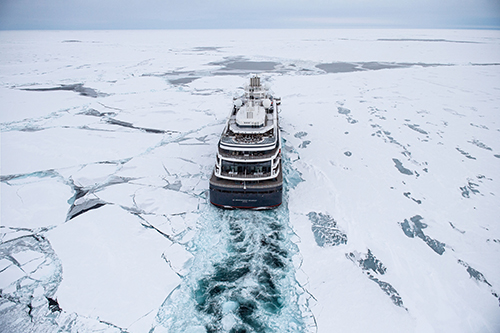
ABOVE: Le Commandant Charcot is not just the industry’s first-ever purpose-built Class II icebreaker for commercial passengers, it’s also the first hybrid polar exploration ship partly fuelled by liquefied natural gas, reducing harmful emissions.
While vessels like the Polar Pioneer, at the time operated by Australia’s Aurora Expeditions, still have their part to play in the ever-expanding expedition cruise scene, lines and expedition companies, increasingly aware of their role in the pristine environments to which they travel, have invested heavily in custom-built ships with as many creature comforts as they have green credentials, and leading this new armada of sustainable ships is Ponant’s spectacular Le Commandant Charcot.
BOLD NEW BEGINNINGS
It’s fitting that expedition cruising’s next chapter should be told by a modern-day icebreaker. Expedition cruising, which traces its origins as a travel option for the adventurous in spirit and deep in pocket, to the 1970s, when companies like Lindblad Expeditions realised not every traveller wanted island-hopping itineraries with midnight buffets. The fleet of icebreakers and ice-strengthened ships that plied the waters of the Russian and Canadian Arctic, and which spend half the year docked waiting for straits to ice over, provided just the alternative, with vessels like 50 Years of Victory, a nuclear-powered icebreaker, quickly capturing imaginations as it took adventure tourists to the North Pole.
Fast forward to today, and the Le Commandant Charcot, which was launched in 2021, continues that legacy, albeit with many more modern amenities.
Ponant’s 150-metre Le Commandant Charcot was designed from the outset to be a beacon of innovation and environmental stewardship in waters that require conservation the most. Part icebreaker, part pleasure ship, the stunning 31,000-tonne beauty was named after French polar explorer Jean-Baptiste Charcot and has, since its launch, helped redefine polar travel with its cutting-edge sustainable technology and ambitious itineraries.
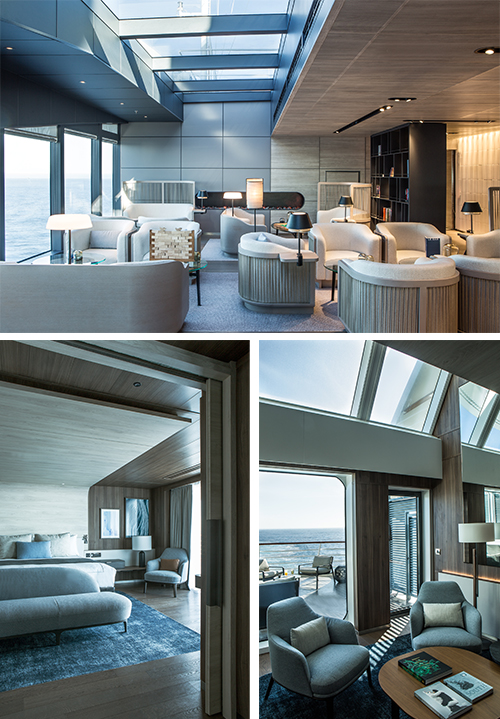
ABOVE: It’s also very luxurious in terms of fit and finish, amenities, toys and even tech (it’s equipped with Starlink Wi-Fi so you’re never offline, even at the North Pole).
A VISION OF SUSTAINABILITY
The development of Le Commandant Charcot began with a bold vision: to create the world’s first hybrid-electric polar exploration vessel powered by liquefied natural gas (LNG). Built by Fincantieri’s Vard shipyard in Norway, in collaboration with Aker Arctic and Stirling Design International, the ship took six years to realise. Its Polar Class 2 (PC2) hull, the highest for any purpose-built cruise ship, enables navigation through 2.5-metre-thick ice floes and access to remote regions like the North Pole, Canada’s Saint Lawrence River, and even Antarctica’s Pine Island Bay (where it ventured in 2023; a first for a passenger ship).
Its hybrid propulsion system, combining LNG and a massive battery bank, allows zero-emission sailing in protected areas, minimising disturbance to wildlife. The vessel’s two massive LNG tanks grant it an unprecedented 45 days of autonomy, while advanced features like shell and sea creature detectors, ballast water processing, and an electronic positioning system that eliminates the need for anchoring also help reduce its impact on delicate marine environments. Onboard, 100 per cent waste sorting and treatment, plus reduced noise and vibration, further lessen its footprint.
These innovations have set a benchmark for competitors like Hurtigruten (Norway’s mail boat company-turned expedition specialists) with its MS Fram, Aurora’s Douglas Mawson, Antarctica XI’s Magellan Discoverer (which is still under construction) and Viking, which recently launched the hydrogen-powered Viking Libra.
A PLATFORM FOR SCIENCE AND EXPLORATION
Beyond its luxurious selling points – and it has plenty, from private balconies with every cabin and an indulgent spa with a fun ‘snow room’, to a restaurant by Alain Ducasse – Le Commandant Charcot is also a floating research hub equipped with wet and dry laboratories, allowing visiting scientists to collect vital data on water, ice, and air as they contribute to global polar research through partnerships like the Polar Research Infrastructure Network (POLARIN). In addition, a SIMS antenna measures ice thickness in real-time, aiding both navigation and science.
To help create a new generation of environmental advocates, guests can assist researchers if they’d like to blend adventure with purpose. This commitment to knowledge echoes Jean-Baptiste Charcot’s legacy, earning the ship its moniker, “the gentleman of the poles.”
When they’re not exploring remote locales by Zodiac, setting out on guided kayak or snowshoe expeditions, or taking the heart-thumping polar plunge, guests can relax in one of 123 staterooms designed by Jean-Philippe Nuel and Jean-Michel Wilmotte to maximise natural light, pairing their sustainable seafood with Hunter Valley semillons at a series of dining outlets, or take a soak in the ship’s swimming pools – one infinity, one indoors.
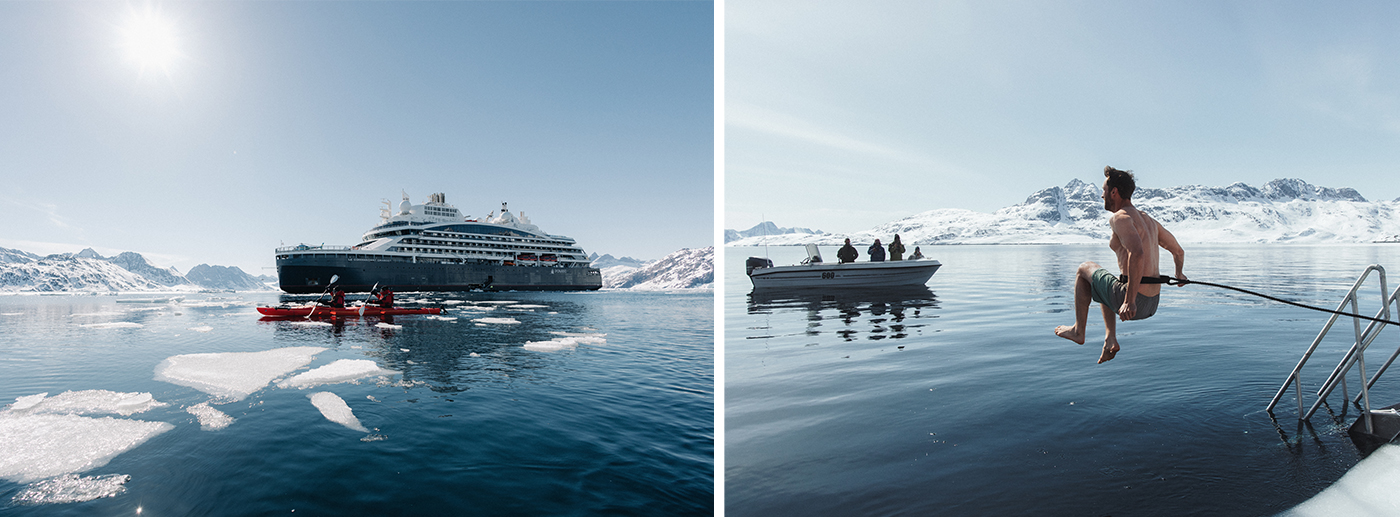
ABOVE: Voyages are at least 15 nights so a wide range of activities is available. Apart from world-class wining and dining, the boat offers an amazing spa, gym, fitness and yoga classes, a cinema, daily talks by naturists, exciting excursions to view walrus, polar bears, and glacial calving sights on Zodiac boats; kayaking along a jagged cliff wall hijacked by penguins; gentle mountain hikes, dips in two pools and even North Pole polar plunges.
SETTING NEW BOUNDARIES
Still, the core of the Le Commandant Charcot experience is adventure, offering cruises to locales no other vessel ventures to. In fact, in January 2028, the ship will embark on an unprecedented 64-day circumnavigation of Antarctica, departing Ushuaia in Argentina, for a 30-day westward leg to Hobart in Tasmania, followed by a 34-day eastern return. This unique itinerary, covering 18,000 kilometres of uncharted coastline, was conceived by seasoned captains Etienne Garcia and Patrick Marchesseau to revive the spirit of explorers like Ross and Shackleton.
During this coveted adventure, guests will explore relics of historic camps, navigate untouched ice, and encounter orcas and emperor penguins via Zodiacs and kayaks, ensuring Le Commandant Charcot’s legacy will not be as just a cruise ship but as exploration and a blueprint for the future of sustainable travel.
Photographer: Julien Fabro, Gilles Trillard & Daniel Ernst
Related Posts